CoinMarketCap AI Plugin for Crypto Analysis
CoinMarketCap launches a ChatGPT plugin that brings real-time crypto data, market trends, and AI-powered analysis into one research tool.

The cryptocurrency market moves quickly, with prices, trading volumes, liquidity, rankings, and market sentiment changing throughout the day. For investors and researchers, keeping up with this information often requires switching between price trackers, charting platforms, news websites, blockchain explorers, and spreadsheets. CoinMarketCap’s ChatGPT plugin was introduced to simplify that process by combining CoinMarketCap’s cryptocurrency data with an artificial intelligence interface capable of answering questions in natural language.
The CoinMarketCap plugin for ChatGPT was announced in 2023 as an AI-powered crypto research assistant. It was designed to give users access to current cryptocurrency information through conversational prompts rather than complicated dashboards or manual data searches. Users could ask about Bitcoin’s performance, compare digital assets, explore historical trends, review market capitalization, or investigate relationships between different crypto metrics. The plugin then used CoinMarketCap data to help generate a structured response.
This launch represented an important step in the development of AI crypto analysis. Rather than replacing traditional market research, the tool aimed to make crypto intelligence easier to access for beginners, traders, analysts, and experienced investors. A user did not need to know how to write code or build an API request. Instead, the user could describe a research question in ordinary language and receive an analysis based on cryptocurrency market data.
The release also reflected a broader shift across the digital asset industry. As artificial intelligence becomes more capable of processing large datasets, crypto platforms are increasingly using AI for market summaries, trend discovery, data interpretation, and personalized research. CoinMarketCap’s plugin connected these two fast-growing sectors: blockchain data and generative AI.
What is the CoinMarketCap ChatGPT plugin?
The CoinMarketCap ChatGPT plugin was a specialized integration that allowed ChatGPT to retrieve and work with information from CoinMarketCap. Standard AI models may have limited access to live financial data, and their training information can become outdated. The plugin was created to address that limitation by connecting the conversational abilities of ChatGPT with CoinMarketCap’s market data infrastructure.
In practical terms, the plugin functioned like a personal crypto analyst. Users could enter questions about specific coins, market movements, historical performance, new listings, trading activity, and broader crypto trends. Instead of manually opening multiple pages, they could use a single conversation to explore an idea and refine the question through follow-up prompts.
CoinMarketCap described the tool as a way to combine real-time cryptocurrency data with ChatGPT’s AI language model. Its suggested use cases included comparing the performance of Bitcoin and Ethereum, examining whether Bitcoin historically performed differently on weekdays and weekends, and studying price activity around major political or economic events.
The plugin was not simply a chatbot trained to discuss cryptocurrency. Its intended value came from its ability to access structured market information, including cryptocurrency prices, market capitalization, trading volume, circulating supply, historical data, and details about individual digital assets. This made it more useful for data-driven questions than a general-purpose AI model operating without a live market-data connection.
Why the launch matters for crypto research
Crypto research has traditionally been fragmented. A person investigating a token might need to review its price chart, market ranking, supply schedule, exchange activity, project description, social sentiment, and historical volatility separately. Each source may use different terminology or present data in a different format.
The CoinMarketCap plugin attempted to reduce that friction. Users could ask an AI system to organize information, compare assets, identify patterns, and explain technical results in plain language. This lowered the barrier to entry for people who found conventional crypto analytics platforms difficult to navigate.
Making complex data easier to understand
Cryptocurrency data can be difficult for newcomers. Terms such as fully diluted valuation, circulating supply, liquidity, market dominance, volatility, and trading volume have specific meanings. An AI interface can explain those concepts while applying them to a particular research question.
For example, a beginner might ask why two tokens with similar prices have very different market capitalizations. The plugin could help explain that market cap depends on price multiplied by circulating supply. A more experienced user could ask for a comparison of the assets’ historical market caps or trading volumes.
This conversational approach is valuable because it supports follow-up questions. A user might begin by asking which assets had the largest gains during a period, then ask how those gains compared with Bitcoin, and finally request an explanation of the risks involved. That type of dialogue can make the research process more intuitive.
Speeding up comparative analysis
Comparing crypto assets manually can be time-consuming. Analysts may need to collect historical prices, align dates, calculate percentage changes, and interpret the results. An AI-assisted plugin can help turn those tasks into a natural-language workflow.
A user could ask the CoinMarketCap plugin to compare Bitcoin, Ethereum, and Cardano over a selected period. The response could then be refined by adding questions about volatility, trading volume, correlation, or performance relative to the total crypto market. CoinMarketCap’s own examples included asset correlation studies and analysis of Bitcoin’s performance after halving events.
This does not eliminate the need for careful verification, but it can shorten the early stages of research. Analysts can use the tool to identify relevant patterns before conducting deeper investigation with charts, spreadsheets, statistical software, or blockchain data.
Connecting real-time information with AI explanations
One of the central benefits of the plugin was its connection to current cryptocurrency information. A general AI model may explain what market capitalization means, but that explanation is different from retrieving the current market capitalization of a particular token and comparing it with other assets.
The plugin was intended to combine both capabilities. It could provide data while also helping users interpret it. This distinction is important in crypto, where conditions can change quickly and stale information may lead to an inaccurate conclusion.
The integration was announced at a time when older AI models often had limited knowledge of recent events and market conditions. The launch announcement specifically positioned the plugin as a way to provide up-to-date cryptocurrency data through ChatGPT.
Key capabilities of the CoinMarketCap plugin
The CoinMarketCap plugin supported several categories of cryptocurrency research. Its capabilities were based on the types of data available through CoinMarketCap and the questions users asked through ChatGPT.
Cryptocurrency prices and market statistics
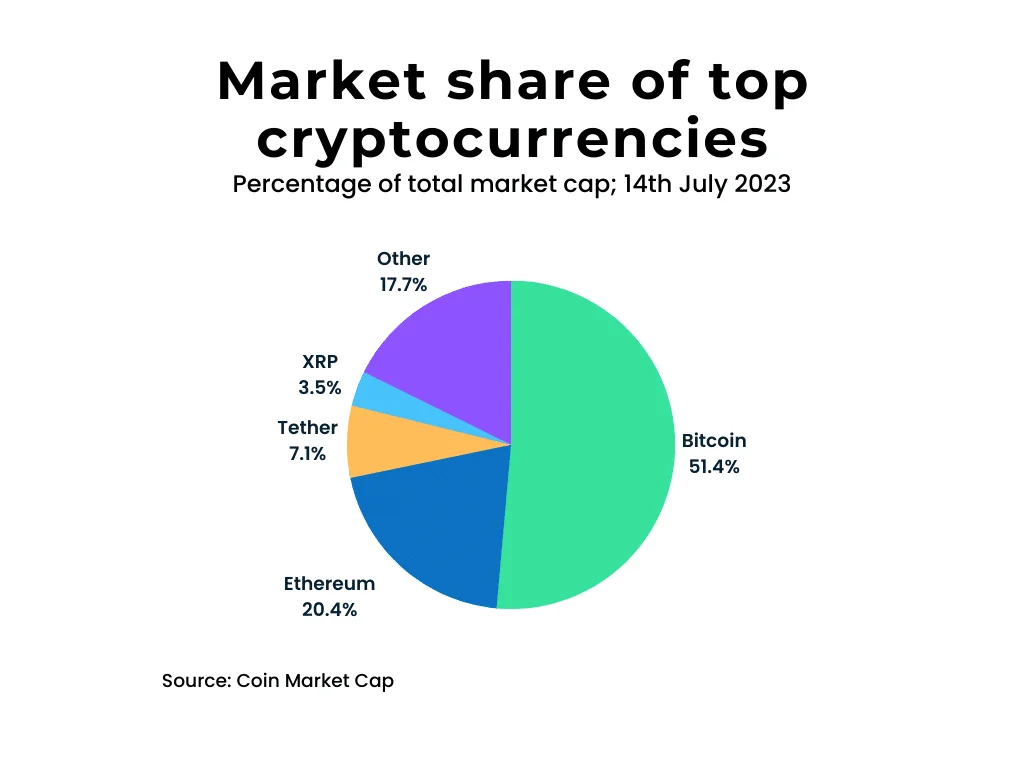
The most basic use case was checking cryptocurrency prices and market statistics. Users could ask about Bitcoin, Ethereum, stablecoins, altcoins, meme coins, or other listed assets. The plugin could provide information such as price, market capitalization, percentage change, trading volume, and circulating supply.
These metrics form the foundation of crypto market analysis. Price shows the current value of an asset, while market capitalization provides a broader view of its size. Trading volume can indicate market activity, although high volume does not automatically prove that an asset is healthy or undervalued. Circulating supply helps users understand how many units are currently available in the market.
An AI interface can also explain the relationship between these measurements. For example, if a token’s price rises while its market cap grows more slowly, changes in circulating supply may be part of the reason. Questions like these can help users move beyond headline price movements.
Historical data analysis
Historical data allows researchers to examine how assets behaved in the past. The plugin could be used to ask about previous price performance, all-time highs, market cycles, and changes over specific time periods.
A user might ask how Bitcoin performed during the month before previous U.S. elections or whether a cryptocurrency typically showed stronger performance after a major network event. CoinMarketCap’s examples highlighted historical comparisons involving elections, Bitcoin halvings, and relationships between different tokens.
Historical analysis is useful because it can reveal recurring patterns, but it must be interpreted carefully. A pattern that appeared during one market cycle may not repeat in another. Crypto markets are influenced by interest rates, regulation, liquidity, technological developments, investor behavior, and unexpected events. Historical performance should therefore be treated as context, not a promise of future results.
New listings and market trends
The plugin also supported research into newly listed cryptocurrencies and trending assets. CoinMarketCap’s plugin documentation described a function for finding recently added cryptocurrencies and another for returning trending market data based on CoinMarketCap search volume.
This feature could help users discover projects receiving increased attention. However, popularity and investment quality are not the same thing. Newly listed tokens may have limited liquidity, incomplete information, high volatility, or elevated risks of manipulation. Similarly, a token trending on a data platform may be attracting attention because of controversy or speculation rather than long-term potential.
The best use of this capability is as a discovery tool. Users can identify assets for further investigation, then examine the project’s documentation, token distribution, team information, development activity, liquidity, and market structure.
Token and project information
The plugin could retrieve metadata for specific cryptocurrencies. This information could include descriptions, websites, platform data, supply details, and links associated with a project.
That makes the tool useful during the initial stage of crypto due diligence. A user can quickly learn whether a token operates on Ethereum, BNB Chain, Solana, or another blockchain, and can review basic information about its supply model and project category.
Still, project descriptions should not be treated as independent validation. Many token pages contain information submitted or influenced by project teams. A responsible researcher should compare the data with official documentation, reputable reporting, blockchain records, and independent analysis.
How users could access and use the tool
When the plugin was available, users needed access to a compatible ChatGPT plan and the plugin-enabled version of GPT-4. CoinMarketCap’s instructions directed users to open ChatGPT, select GPT-4, choose the plugins option, search for CoinMarketCap, install it, and then activate it inside a conversation.
Once enabled, users could ask questions about market data through ordinary prompts. The quality of the response depended heavily on the quality and specificity of the question. A vague prompt such as “Tell me about crypto” would likely produce a general answer. A more focused prompt could produce a more useful analysis.
Creating better prompts
Specific prompts help an AI system understand the intended task. A strong prompt should identify the assets, time period, metrics, currency, and desired format.
For example, a user could ask the plugin to compare Bitcoin and Ethereum’s percentage performance over a defined period, explain the difference in volatility, and separate factual data from interpretation. Another prompt might request a summary of the largest cryptocurrencies by market capitalization while including circulating supply and 24-hour trading volume.
Users could also request refinements. CoinMarketCap recommended asking for particular formats, working from examples, and requesting a more detailed explanation when the initial answer was incomplete.
The most useful workflow is iterative. Begin with a broad research question, inspect the answer, identify missing information, and ask a narrower follow-up question. This approach turns the plugin into an interactive research assistant rather than a one-click prediction machine.
Benefits for different types of crypto users
The CoinMarketCap plugin could serve different audiences in different ways. Beginners could use it to learn market terminology and understand basic data. Intermediate users could compare assets and examine historical performance. Professional researchers could use it to accelerate data discovery and generate preliminary hypotheses.
For educators, the tool could make classroom discussions more engaging by allowing students to ask questions about market capitalization, token supply, or historical crypto cycles. Content creators could use it to organize background research before writing an article or recording a video.
Traders might use the plugin to monitor market conditions or compare assets, but they should not assume that an AI-generated response constitutes a trading signal. Short-term crypto trading requires reliable execution data, liquidity analysis, risk controls, and a clear strategy. A conversational tool can support preparation, but it cannot remove market risk.
Limitations and risks of AI crypto analysis

AI-assisted market research is powerful, but it has limitations. A plugin may retrieve accurate data while still producing an incomplete or poorly reasoned interpretation. It may misunderstand a question, use an unsuitable time period, confuse token symbols, or present correlation as causation.
Data does not equal investment advice
Market data is descriptive. It explains what has happened or what is currently visible in the market. It does not guarantee what will happen next. Even a statistically interesting historical relationship can break down when market conditions change.
The plugin’s own materials stated that the information was for informational purposes and was not financial advice. They also encouraged users to conduct their own research before making significant decisions.
Users should therefore treat AI-generated analysis as an input in a broader decision-making process. Important decisions should include independent verification, risk assessment, consideration of personal financial circumstances, and an understanding of potential losses.
Real-time data still requires context
A current price can become outdated quickly in a volatile market. Different exchanges may show different prices, volumes, and liquidity conditions. A token may appear to have strong volume while much of that activity is concentrated on only one venue.
Researchers should examine how data is sourced and understand the methodology behind rankings and metrics. Market capitalization, for example, can be affected by the accuracy of circulating-supply information. Fully diluted valuation may show a very different picture from the current market cap when a project has substantial future token unlocks.
AI can produce confident mistakes
Generative AI systems often present answers in a fluent and confident style. That does not mean every statement is correct. Users should verify important figures, dates, calculations, and claims against the underlying data.
A sensible practice is to ask the AI to show the assumptions behind its analysis. Users can request the precise date range, assets included, calculation method, and limitations of the conclusion. This makes it easier to identify errors and distinguish raw data from interpretation.
The broader future of AI and cryptocurrency
The CoinMarketCap plugin was an early example of how AI could change access to crypto intelligence. The basic idea has since expanded into AI-generated summaries, automated research dashboards, portfolio tools, market-screening systems, and blockchain analytics platforms.
The most promising applications are likely to combine several data types. Price and volume data can be paired with on-chain activity, token unlock schedules, developer activity, social sentiment, exchange reserves, and macroeconomic indicators. AI can help users organize these inputs and identify areas that deserve closer attention.
However, the quality of AI crypto analysis will depend on data quality, transparency, methodology, and user judgment. A system that explains its sources, distinguishes fact from inference, and shows how conclusions were reached is more useful than one that provides unsupported predictions.
The future may also involve personalized research agents that monitor selected assets, summarize major developments, identify unusual changes in liquidity, and alert users to new information. Such systems could make sophisticated analysis more accessible, but they would also require strong safeguards against misinformation, overconfidence, and impulsive trading.
Conclusion
CoinMarketCap’s ChatGPT plugin introduced a new way to approach cryptocurrency research by combining CoinMarketCap’s market data with an AI-powered conversational interface. Launched in 2023, the tool was designed to help users investigate prices, market capitalization, trading volume, historical performance, new listings, project information, and relationships between crypto assets.
Its main advantage was convenience. Instead of manually searching across several platforms, users could ask questions in plain language and refine the analysis through follow-up prompts. That made complex cryptocurrency information easier to explore, especially for people who lacked technical or coding experience.
At the same time, the plugin was not a substitute for independent research or professional financial advice. AI can accelerate data analysis, but it cannot guarantee accurate predictions or eliminate cryptocurrency risk. The most responsible approach is to use AI crypto analysis as a research aid, verify important information, understand the underlying metrics, and make decisions based on a complete assessment of risk and evidence.
FAQs
Q. What was the CoinMarketCap ChatGPT plugin?
The CoinMarketCap ChatGPT plugin was an integration that connected ChatGPT with CoinMarketCap’s cryptocurrency data. It allowed users to ask natural-language questions about crypto prices, market capitalization, trading volume, historical data, listings, and asset comparisons.
Q. What could users ask the CoinMarketCap plugin?
Users could ask about the current or historical performance of specific cryptocurrencies, compare multiple assets, review market trends, investigate new listings, examine token information, and explore relationships between market metrics.
Q. Was the CoinMarketCap plugin a cryptocurrency trading bot?
No. The plugin was designed primarily for cryptocurrency research and analysis. It could help users understand market information, but it was not an automated trading system and did not guarantee profitable trades or provide reliable predictions about future prices
Q. How can AI improve crypto research?
AI can make crypto research faster by organizing market data, explaining technical concepts, comparing assets, summarizing information, and helping users identify patterns for further investigation.
Q. Should investors rely entirely on AI crypto analysis?
Investors should not rely entirely on AI-generated analysis. AI may misunderstand questions, use incomplete information, or produce incorrect conclusions.