Bitmine Reaches 4.8% of Ethereum Supply Under Tom Lee
Tom Lee’s Bitmine now holds 4.8% of Ethereum supply after buying 9,926 ETH, bringing its holdings to 5.815 million tokens.
Bitmine Immersion Technologies has strengthened its position as the world’s largest publicly traded Ethereum treasury company after purchasing another 9,926 ETH. The latest acquisition lifted Bitmine’s total Ethereum holdings to approximately 5.815 million ETH, representing about 4.8% of the cryptocurrency’s total supply.
The purchase places the company within reach of its ambitious “Alchemy of 5%” objective: acquiring an amount of Ether equivalent to 5% of Ethereum’s total supply. At an ETH price of approximately $1,904 at the time of the announcement, Bitmine’s holdings were valued at around $11 billion. The company trades on the Nasdaq under the ticker BMNR and is chaired by Fundstrat Global Advisors co-founder Tom Lee.
Bitmine’s latest move is significant for more than its headline value. It highlights the growing influence of corporate crypto treasuries, the increasing institutional interest in Ethereum, and the changing role of ETH as both a digital asset and a productive financial instrument. Unlike companies that simply hold cash or Bitcoin, Ethereum treasury firms can potentially generate additional income through staking while maintaining exposure to the long-term growth of the Ethereum network.
The transaction also extends a purchasing pattern that began in June 2025. Bitmine has continued adding Ether on a weekly basis despite substantial volatility in the cryptocurrency market. Its strategy reflects a belief that Ethereum could benefit from the expansion of tokenized real-world assets, stablecoins, decentralized applications, and artificial intelligence agents that require blockchain-based settlement.
Bitmine adds another 9,926 ETH to its treasury
Bitmine announced that it purchased 9,926 ETH during the week ending August 16, 2026. Following the transaction, the company reported total holdings of roughly 5.815 million Ether. Based on Ethereum’s total supply of approximately 120.7 million tokens, Bitmine now controls close to 4.8% of the network’s supply.
Although 9,926 ETH is relatively small compared with Bitmine’s overall position, the purchase matters because it continues the company’s established accumulation program. Rather than making a single large acquisition and stopping, Bitmine has presented its treasury policy as a sustained effort to build an enormous long-term ETH reserve.
This approach resembles the treasury strategy used by some publicly traded companies that accumulate Bitcoin. However, the economic characteristics of Ethereum are different. Bitcoin is primarily viewed as a scarce digital store of value, while Ethereum also functions as the native asset of a programmable blockchain. ETH is used to pay transaction fees, secure the network through staking, and interact with applications involving decentralized finance, gaming, digital collectibles, and tokenized assets.
The combination of price exposure and potential staking income is central to the Ethereum treasury strategy. If Bitmine stakes a large portion of its ETH, it may receive rewards denominated in Ether. Those rewards could increase the company’s total holdings over time, although staking also involves technical, liquidity, custody, and market risks.
Bitmine is approaching its 5% Ethereum target
Bitmine’s stated goal is to own 5% of Ethereum’s total supply. With approximately 4.8% already accumulated, the company is about 96% of the way toward that target, according to coverage of its latest holdings. Reaching 5% would require the company to acquire roughly 240,000 additional ETH if Ethereum’s supply remained close to 120.7 million tokens.
That calculation is only an approximation. Ethereum’s supply changes over time because new ETH is issued to validators while some ETH is permanently removed through transaction-fee burning. The exact number needed to reach 5% could therefore change depending on network activity, staking conditions, and Ethereum’s monetary policy.
The target is strategically important because it gives investors a straightforward way to measure Bitmine’s progress. It also creates a clear narrative around the company’s stock. Investors are not only evaluating Bitmine as an operating business; they are also assessing its ETH holdings, financing methods, staking performance, share count, and relationship to the market value of Ethereum.
However, owning 5% of Ethereum does not mean Bitmine controls the network. Ethereum is secured and governed through a broad ecosystem of validators, developers, users, node operators, applications, and token holders. A large corporate holding may influence market liquidity and investor sentiment, but it does not give a company unilateral power over protocol upgrades or transaction processing.
Why Tom Lee remains bullish on Ethereum

Tom Lee has argued that Ethereum could benefit from several long-term trends. Among the most important are stablecoin growth, asset tokenization, artificial intelligence applications, and improving financial conditions.
Ethereum remains one of the most widely used platforms for smart contracts and decentralized applications. Smart contracts are blockchain-based programs that automatically execute rules when specific conditions are met. They can support lending markets, exchanges, payment systems, insurance products, gaming economies, and other applications without relying entirely on traditional intermediaries.
Lee’s thesis is that the value of Ethereum may rise as more economic activity moves onto programmable blockchain infrastructure. If businesses issue digital versions of stocks, bonds, funds, real estate interests, or other assets, Ethereum and its associated networks could serve as settlement infrastructure. This trend is commonly described as real-world asset tokenization.
Stablecoins are another major part of the argument. Stablecoins are digital tokens designed to maintain a relatively stable value, often through reserves of fiat currency or other assets. They are increasingly used for crypto trading, international transfers, decentralized finance, and blockchain-based payments. If stablecoin activity expands, demand for blockspace and Ethereum-compatible infrastructure could grow as well.
Lee has also pointed to the potential role of AI agents. Autonomous software agents may eventually perform tasks such as purchasing services, managing accounts, negotiating transactions, and making machine-to-machine payments. A public blockchain could provide a neutral settlement layer for these activities, particularly when the parties involved do not share the same banking system or organizational structure.
These themes do not guarantee that Ethereum’s price will rise. Adoption could develop more slowly than expected, competing networks could gain market share, regulation could restrict certain applications, and technological improvements could reduce demand for ETH in ways investors do not anticipate. Still, the thesis explains why Bitmine is positioning itself around Ethereum rather than treating the token as a short-term trading asset.
The ETH/BTC ratio becomes a key market signal
Another factor cited by Tom Lee is the performance of the ETH/BTC ratio. This ratio measures the price of Ether relative to Bitcoin. When the ratio rises, Ether is outperforming Bitcoin. When it falls, Bitcoin is outperforming Ether.
Lee said the ETH/BTC ratio had broken above a downward trend that had persisted for years. He views that move as a possible sign that investors are beginning to recognize stronger demand for Ethereum-related applications, including tokenization and AI-agent transactions.
The ETH/BTC ratio is closely followed because it provides a relative measure of sentiment within the cryptocurrency market. Bitcoin is often treated as the sector’s benchmark asset, while Ethereum is more closely associated with blockchain applications and digital infrastructure. A sustained rise in the ratio could suggest that capital is rotating toward platforms with broader utility.
A single technical breakout, however, should not be treated as proof of a lasting trend. Cryptocurrency markets can produce false breakouts, especially when liquidity is thin or macroeconomic expectations shift rapidly. Traders typically examine the ratio alongside Ethereum network activity, ETF flows, developer activity, stablecoin supply, staking participation, and overall risk appetite.
For Bitmine, stronger ETH performance relative to Bitcoin would have a direct effect on the value of its treasury. A weaker ETH/BTC ratio could create the opposite result, particularly if Bitmine’s stock price is already trading at a premium or discount to the value of its underlying assets.
Easing financial conditions could support crypto assets
Tom Lee also expects easing financial conditions to provide a tailwind for cryptocurrency markets. Financial conditions include factors such as interest rates, liquidity, credit availability, currency trends, and investor willingness to hold riskier assets.
When borrowing costs decline and liquidity improves, investors may become more comfortable allocating capital to assets with higher volatility. Cryptocurrency markets have historically responded strongly to changes in liquidity expectations because digital assets do not generate traditional cash flows in the same way as many stocks and bonds.
Lower rates can also affect the opportunity cost of holding nontraditional assets. If investors receive less income from cash and short-term government securities, they may search for assets with greater potential returns. That can benefit Bitcoin, Ethereum, and other speculative investments, although the same dynamic can produce sharp losses when interest rates rise or liquidity contracts.
Bitmine’s accumulation strategy is therefore exposed to both Ethereum-specific developments and broader macroeconomic conditions. Even if Ethereum adoption expands, a hostile interest-rate environment could place downward pressure on ETH and BMNR shares. Conversely, improving liquidity could amplify demand for crypto treasury companies by making their holdings more valuable and their financing options more attractive.
Bitmine’s Ethereum holdings are not the same as owning ETH directly
The company’s growing treasury has attracted investors who want exposure to Ethereum through a public stock. Yet buying BMNR is not identical to buying ETH.
An investor who purchases Ether directly receives exposure to the token’s market price and may be able to use it within the Ethereum ecosystem. An investor who buys Bitmine shares owns equity in a company. The stock’s value depends on the market value of its Ethereum holdings, but also on management decisions, capital raises, operating expenses, debt, share issuance, staking results, investor sentiment, and the company’s valuation relative to its net asset value.
This distinction is important. A crypto treasury company can trade above the value of the digital assets on its balance sheet when investors place a premium on its strategy, access, liquidity, or expected growth. It can also trade below the value of its assets if the market loses confidence or believes the company will issue too many shares.
Share dilution is another consideration. If Bitmine sells additional shares to raise funds for more ETH purchases, existing shareholders may own a smaller percentage of the company. That financing can still be beneficial if the capital is deployed effectively, but investors must examine how the company’s ETH per share changes rather than focusing only on total ETH holdings.
The company’s performance should therefore be evaluated through several measures. These include total ETH owned, ETH held per diluted share, staking revenue, cash reserves, liabilities, operating expenses, and the premium or discount between the stock’s market capitalization and the value of its digital assets.
Bitmine is also repurchasing its own shares
Alongside its latest ETH purchase, Bitmine reported buying back approximately 1.7 million shares during the week. The company said it had acquired 20.8 million shares under a previously authorized $4 billion repurchase program.
A share buyback can be significant for a company whose market value is closely linked to its asset holdings. If shares are trading below the value of the company’s assets, repurchasing them may increase the ETH exposure represented by each remaining share. In theory, this can improve the relationship between the stock price and the company’s underlying treasury.
The effectiveness of a buyback depends on its price and timing. Repurchasing shares at a deep discount may create value for continuing shareholders, while buying at an excessive premium could have the opposite effect. The company must also balance buybacks against the need to fund operations, meet obligations, maintain liquidity, and acquire additional Ethereum.
Bitmine’s decision to pursue both ETH accumulation and share repurchases suggests that management is attempting to manage two sides of its capital structure. One strategy increases the company’s digital-asset holdings, while the other reduces the number of outstanding shares. Investors will likely watch whether these actions increase ETH per share over time.
Staking could provide additional income
Ethereum transitioned to a proof-of-stake consensus system, meaning validators help secure the network by depositing and staking ETH. In return, eligible participants may earn staking rewards.
Bitmine has expanded its staking operations involving more than 5 million ETH, with projected annual rewards reported at roughly $287 million. These figures are estimates and can change based on validator participation, network activity, reward rates, service costs, and the amount of ETH actively staked.
Staking income could make Ethereum more attractive as a corporate treasury asset. A company holding idle cash generally earns interest through financial instruments, while a company holding ETH may potentially earn protocol-based rewards. Those rewards can be reinvested, increasing the treasury’s ETH balance, or used to support business expenses.
The process is not risk-free. Staked assets may be subject to withdrawal delays, technical failures, validator penalties, custody risks, and changes in Ethereum’s reward structure. Institutional staking also requires careful operational controls. A mistake in managing private keys, validator infrastructure, or third-party providers could create losses.
For Bitmine shareholders, the key issue is whether staking revenue meaningfully improves long-term value after all costs and risks are considered. Reported rewards should not be interpreted as guaranteed returns.
What the 4.8% holding means for Ethereum markets
Bitmine’s ownership of 4.8% of Ethereum supply makes it an important market participant. Large purchases can reduce the amount of ETH available for immediate trading, particularly if the acquired tokens are held in long-term custody or deposited into staking contracts.
A lower liquid supply can contribute to price sensitivity. If demand rises while fewer tokens are available on exchanges, relatively small purchases may have a larger impact on market prices. This effect can work in both directions: positive demand can accelerate gains, while sudden selling can intensify declines.
Bitmine’s strategy may also encourage other public companies to consider Ethereum corporate treasury models. If investors reward the company with a high valuation, other firms could attempt to replicate the approach. That could create a feedback loop in which corporate demand becomes a more visible component of the ETH market.
At the same time, concentration creates risks. If one company becomes a major holder and later needs to liquidate assets, the market may worry about selling pressure. The company’s financing structure also matters. Debt obligations, preferred securities, or shareholder redemptions could force asset sales during unfavorable market conditions.
The broader effect will depend on whether Bitmine remains a consistent accumulator, how much ETH it stakes, and how its stockholders respond during periods of market stress.
Should investors follow Bitmine’s Ethereum strategy?
Bitmine’s activity may strengthen the long-term investment case for Ethereum, but it does not automatically make ETH or BMNR suitable for every investor. The company is making a concentrated bet on a single digital-asset ecosystem. Investors who disagree with Tom Lee’s expectations for Ethereum adoption may view the strategy as excessively risky.
Ethereum has several potential growth drivers, including decentralized finance, stablecoins, tokenized assets, layer-2 networks, and institutional adoption. It also faces challenges involving network fees, competition, regulation, technology upgrades, security, and market volatility.
The difference between an attractive asset and an attractive investment price is equally important. Even if Ethereum performs well, BMNR shares could underperform if the stock loses its premium, if new shares dilute existing holders, or if investors prefer direct ETH exposure.
A careful evaluation should consider personal risk tolerance, investment timeframe, portfolio concentration, and the difference between holding ETH directly and owning an equity security linked to ETH. Investors should also avoid assuming that Tom Lee’s past market calls guarantee future results.
The long-term outlook for Bitmine and Ethereum
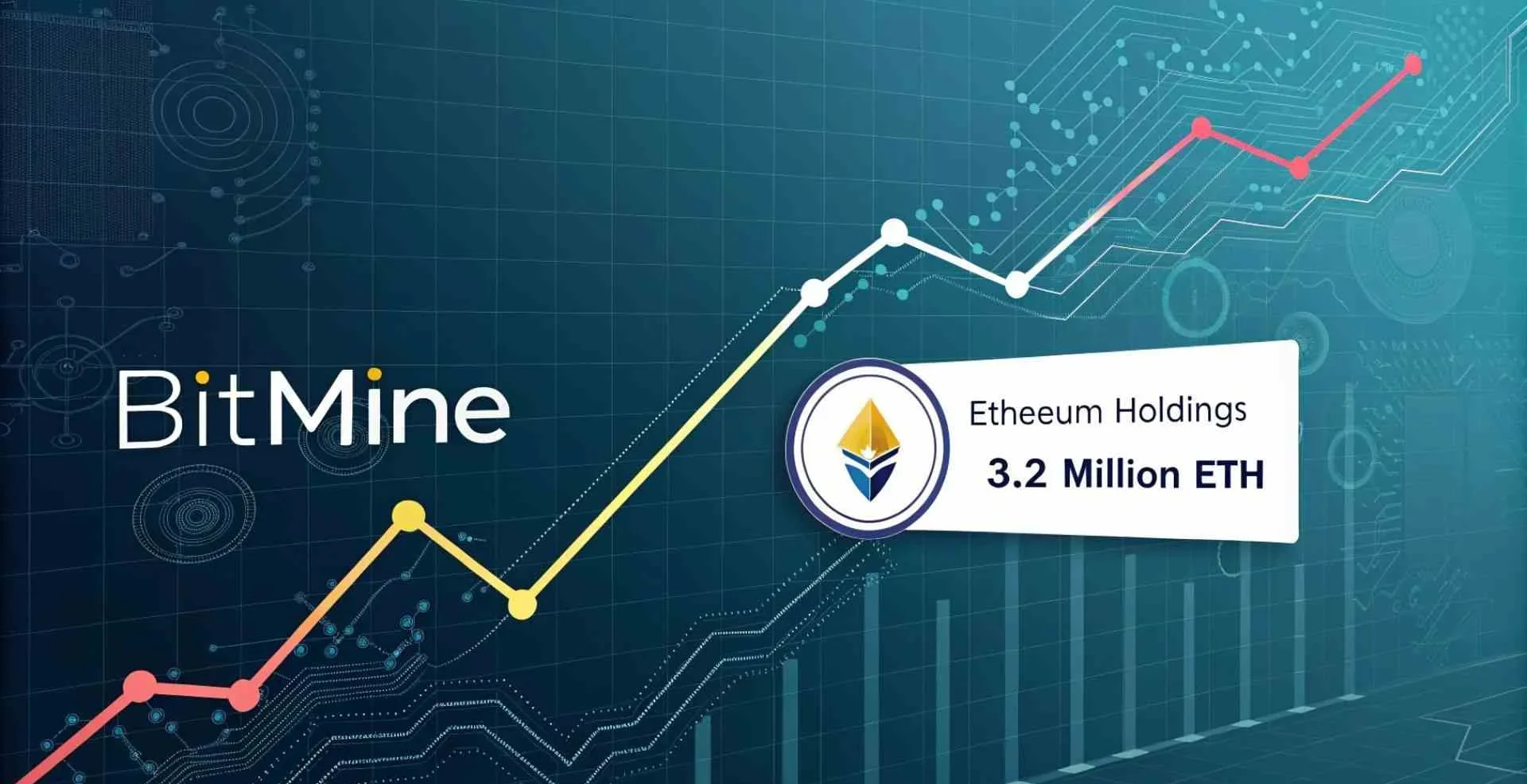
Bitmine’s latest purchase confirms that the company intends to remain a major force in the Ethereum treasury market. With 5.815 million ETH already accumulated and a 5% target in sight, the company has created one of the most visible institutional bets on Ethereum’s future.
The outcome will depend on whether Ethereum becomes essential infrastructure for digital finance, tokenized assets, stablecoin payments, and autonomous software agents. If those markets expand, demand for ETH could rise as the network processes more economic activity and investors seek exposure to its growth.
The strategy could also face serious obstacles. Ethereum’s price may remain volatile, staking yields may decline, competing blockchains may attract users, and adverse macroeconomic conditions may weaken demand for risk assets. Bitmine’s stock could experience even greater volatility because it combines cryptocurrency exposure with corporate and equity-market risks.
For now, the company’s continued purchases show that Tom Lee and Bitmine’s management are willing to invest through uncertainty. The 4.8% milestone is both a statement of conviction and a test of whether a public company can build a productive, large-scale. Ethereum treasury without exposing shareholders to unacceptable financial risk.
Conclusion
Tom Lee’s Bitmine now owns approximately 4.8% of Ethereum’s total supply after purchasing another 9,926 ETH. Its holdings have reached about 5.815 million tokens, valued at roughly $11 billion at the reported market price. The company is nearing its goal of owning 5% of Ethereum and has continued its weekly accumulation program since June 2025.
Bitmine’s strategy reflects a broader shift toward corporate crypto treasuries, with Ethereum increasingly viewed as more than a speculative asset. Its role in smart contracts, stablecoins, decentralized applications, tokenized real-world assets, and potential AI-agent transactions gives the network a distinctive long-term investment narrative.
However, the size of Bitmine’s holdings does not eliminate risk. ETH remains volatile, staking involves operational challenges, and BMNR shares can behave differently from Ethereum itself. Investors should assess the company’s ETH per share, financing practices and exposure to market conditions before drawing conclusions.
FAQs
Q. How much Ethereum does Bitmine own?
Bitmine owns approximately 5.815 million ETH after purchasing an additional 9,926 Ether during the week ending August 16, 2026. That amount represents about 4.8% of Ethereum’s total supply.
Q. What is Bitmine’s Ethereum target?
Bitmine has stated a goal of owning 5% of Ethereum’s total supply. The company refers to this objective as the “Alchemy of 5%” strategy.
Q. Who is Tom Lee at Bitmine?
Tom Lee is the chairman of Bitmine Immersion Technologies. He also works at Fundstrat Global Advisors and is known for his bullish views on Bitcoin and Ethereum.
Q. Does Bitmine’s stock equal direct ownership of Ethereum?
No. BMNR is a publicly traded company, whereas ETH is a digital asset. BMNR’s value can depend on its Ethereum holdings, but share dilution, staking operations. Management decisions can also affect its value.
Q. Why is Ethereum important to Bitmine’s strategy?
Ethereum supports smart contracts, decentralized applications, stablecoins, tokenized assets, and staking. Bitmine believes that increased use of these applications could strengthen long-term demand for ETH .