Philippine Central Bank to Launch CBDC Without Blockchain Technology
The Bangko Sentral ng Pilipinas plans to introduce a wholesale CBDC without blockchain technology by 2029. Discover the latest updates on the Philippines' digital currency initiative.
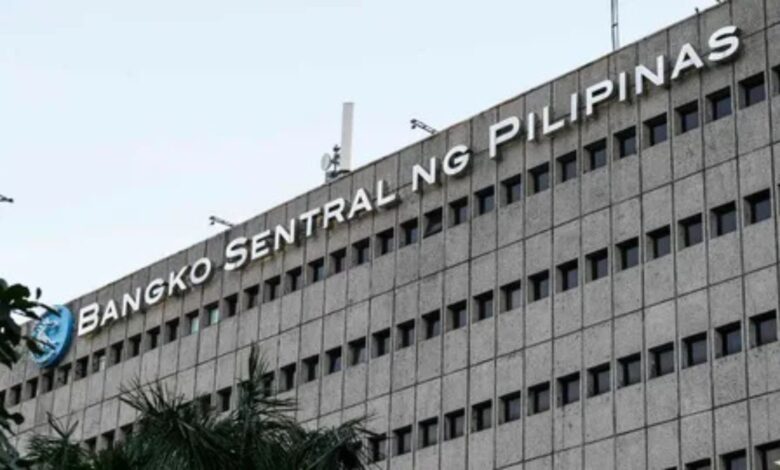
The Bangko Sentral ng Pilipinas (BSP) is charting a unique path in the global central bank digital currency landscape by deliberately rejecting blockchain technology in favor of alternative infrastructure. This strategic decision represents a fundamental shift in how the Philippines approaches digital currency innovation, distinguishing it from many international peers who have experimented with distributed ledger technology. Governor Eli Remolona Jr. has been explicit about this direction, stating that “other **central banks** have tried blockchain, but it didn’t go well,” signaling the nation’s commitment to learning from global CBDC experiments and adopting a more pragmatic approach.
The Philippine digital currency initiative marks a significant moment in Asia’s financial technology evolution. Rather than pursuing retail digital currencies that could pose systemic risks, the BSP has strategically focused on developing a wholesale CBDC designed exclusively for institutional use among banks and financial institutions. This decision reflects not only technical considerations but also a deeper understanding of how existing payment infrastructure can be enhanced without unnecessary technological complexity. The upcoming digital peso for institutional settlement represents a calculated move to improve interbank efficiency while avoiding the pitfalls that other nations encountered during their blockchain-based experiments.
The Philippine CBDC Strategy
The Shift Away from Blockchain Technology
The BSP’s rejection of blockchain-based technology stands out prominently in the current global CBDC conversation. When Central Bank Governor Eli Remolona Jr. announced that the Philippines would not use blockchain for its central bank digital currency, it sent a clear signal: technical innovation must be tempered with practical results. This decision wasn’t made in a vacuum. The governor’s statement reflected careful observation of international CBDC experiments, particularly China’s e-CNY project, which despite a decade of development and significant investment, remains marginal in actual usage. The e-CNY transactions, according to the Peterson Institute, represented only approximately 0.2% of what flows through traditional bank cards and dominant mobile payment platforms.
The decision to move away from blockchain infrastructure doesn’t mean the Philippines is rejecting digital currency innovation altogether. Rather, it represents a refined understanding of technological appropriateness. The BSP has determined that for wholesale CBDC applications, traditional payment and settlement systems can be enhanced through modernization without introducing the computational overhead. Scalability challenges, and operational complexities associated with blockchain networks. This pragmatic approach allows the institution to focus resources on achieving actual financial inclusion and payment efficiency rather than pursuing technological solutions searching for problems.
Wholesale CBDC Over Retail Models
The Bangko Sentral ng Pilipinas has definitively ruled out a retail CBDC for general public use, a decision that aligns with Governor Remolona’s explicit statement: “The decision is to limit it to wholesale. No retail.” This distinction proves crucial for understanding the Philippines’ digital currency strategy. A retail digital currency would make accounts held directly at the central bank available to consumers. Creating potential for significant bank runs during financial stress. As deposits could move instantly from commercial banks to the central bank—a scenario regulators view with considerable concern.
The wholesale CBDC model, by contrast, operates within the financial system’s infrastructure layer, serving as a settlement mechanism for large-value transactions between institutions. This approach leverages existing payment systems like the National Retail Payment System (NRPS), which encompasses InstaPay for real-time, low-value transfers, and PESONet for larger batch payments. These systems already demonstrated extraordinary growth—in 2025 alone, they processed 24.745 trillion Philippine pesos across 4.773 billion transactions, representing a 42% increase from the previous year. By building a wholesale digital currency atop this proven infrastructure rather than creating a competing consumer-facing alternative, the Philippines optimizes for stability and efficiency.
Project Agila: Testing the Future of Philippine Digital Currency
The Pilot Program and Its Participants
Project Agila, the BSP’s comprehensive CBDC pilot program. Concluded successfully on December 5, 2024, after rigorous testing involving major Philippine financial institutions. The pilot brought together significant players in the banking and fintech sectors: BDO Unibank Inc., China Banking Corporation, Land Bank of the Philippines, Rizal Commercial Banking Corporation. Union Bank of the Philippines, and Maya Philippines Inc.—representing both traditional banking and innovative fintech approaches. Additional institutions participated as observers, including Citibank. China Bank Savings, Wealth Development Bank Corporation, and the digital lender SeaBank Philippines.
The structured pilot tested the wholesale CBDC in a closed experimental environment designed specifically to validate operational capabilities. Participants engaged in large-value fund transfers between institutions during and outside regular business hours. Evaluating how a digital currency settlement system could maintain functionality even when the traditional PhilPaSS Plus real-time gross settlement system became unavailable. This scenario-testing proved invaluable for understanding the practical benefits a wholesale digital currency could provide to the Philippine banking system. Governor Eli M. Remolona Jr. noted that the insights gained would guide the BSP’s comprehensive CBDC roadmap, emphasizing that “wholesale CBDCs are expected to enhance **liquidity management**, reduce **settlement risks**, and support **financial stability**.”
Why Not Blockchain? The Technical Rationale
The initial Project Agila pilot actually contemplated using Hyperledger Fabric. An open-source distributed ledger technology platform maintained by the Linux Foundation. Hyperledger Fabric offered modular architecture. Sophisticated identity management, and access control features particularly suited to financial applications. However, the BSP’s subsequent decision to abandon blockchain infrastructure for the final CBDC implementation reflects learning from the pilot phase and observations of global experiments. When the central bank shifted its official position to exclude blockchain technology. It represented a technical pivot based on demonstrated evidence rather than theoretical superiority.
The Philippines’ pragmatic approach diverges sharply from nations that have pursued blockchain-based digital currencies without clear use-case validation. China’s e-CNY, despite employing advanced distributed ledger infrastructure, failed to gain meaningful adoption. The Peterson Institute noted that effective January 2026, China substantially redesigned the e-CNY into interest-bearing digital deposits. Essentially walking away from the original cash-replacement design. Similarly, mBridge, a multilateral wholesale CBDC project backed by multiple central banks. Processed only roughly 4,047 transactions for approximately $55 billion in total value—a negligible volume for a project with such institutional backing. These outcomes informed the BSP’s decision to prioritize operational pragmatism over technological prestige.
The Road Ahead: CBDC Implementation Timeline and Use Cases
Government Bond Settlement and Cross-Border Payments
In February 2026, the BSP announced a strategic expansion of its CBDC roadmap, with Deputy Governor Mamerto Tangonan revealing plans to use the wholesale CBDC specifically for settling government bonds. This development proved particularly significant because the Bureau of the Treasury had already launched Tokenized Treasury Bonds (TTBs) as part of its digital transformation initiative. These bonds, issued as digital tokens and managed through distributed ledger technology. Required a complementary settlement mechanism—precisely what a wholesale digital currency could provide. “What we are thinking of doing next is to focus on wholesale CBDC settling government bonds,” Tangonan explained, emphasizing that the Bureau of the Treasury’s tokenized bonds “just lacked a settlement instrument. So we will be providing that with CBDC.”
Beyond domestic government securities, the BSP identified large-value cross-border payments as another critical application for its wholesale CBDC. Cross-border transactions between the Philippines and international partners frequently involve settlement delays. Currency conversion friction, and exposure to intermediary bank risks. A digital currency settlement system could reduce these frictions. Enabling faster settlement of international payments while simultaneously lowering transaction costs for Philippine banks engaged in global commerce. These practical use cases demonstrate that the BSP’s CBDC initiative isn’t pursuing technology for its own sake but rather solving specific. Quantifiable problems within the financial infrastructure.
International Collaboration and Regional Standards
The Bangko Sentral ng Pilipinas recognized early that central bank digital currency development transcends national borders. Particularly in regions like Southeast Asia where cross-border financial flows constitute a significant portion of economic activity. In April 2026. The BSP and the Central Bank of the United Arab Emirates signed a memorandum of understanding to collaborate on CBDC platform development. This agreement facilitated the sharing of “expertise in developing **central bank digital currency platforms** for individuals and institutions,” creating bilateral channels for technical knowledge exchange and lessons learned. Such international partnerships prove essential given the nascent nature of wholesale digital currency implementation globally.
The BSP also benefited from technical assistance provided by the International Monetary Fund (IMF) and coordination through the Bank for International Settlements (BIS)—institutions that have extensively documented global CBDC development efforts. The IMF provided targeted technical support focused on “stakeholder engagement” to develop meaningful use cases for the Philippine digital currency. This external expertise supplemented internal BSP knowledge. Allowing Filipino regulators to benefit from experiments conducted across jurisdictions while avoiding costly repetition of mistakes. By positioning itself within international networks of central bank innovators. The Philippines built technical capacity while maintaining strategic independence in implementation decisions.
The Broader Context: Why the Philippines’ CBDC Approach Works
Existing Payment Infrastructure as a Foundation
The Philippines’ success with digital payment adoption provides crucial context for understanding the BSP’s measured approach to central bank digital currencies. Unlike nations pursuing retail CBDCs partly to drive financial inclusion from scratch. The Philippines already achieved digital payment penetration exceeding 50% of retail transactions—reaching 57.4% of transaction volume in 2024. This achievement wasn’t driven by a retail digital currency or even by a single dominant “super app,” but rather by robust public payment infrastructure that enabled private-sector competition and innovation. InstaPay and PESONet. The dual engines of the National Retail Payment System, processed 4.656 billion transactions alone in InstaPay in 2025—a 231% jump year-over-year.
This existing infrastructure success explains why the BSP didn’t pursue a retail CBDC. A consumer-facing digital peso would have competed with already-entrenched fintech solutions like GCash and Maya. Which had achieved genuine market traction and customer loyalty precisely because they operated on top of shared, interoperable public rails. The QR Ph standard, adopted nationwide. Allowed any merchant accepting QR codes to accept payments from any digital wallet. Dramatically reducing barriers to commerce. Introducing a government-backed retail digital currency into this ecosystem would have disrupted the competitive balance that fostered the current high adoption rates. Instead. The BSP’s wholesale CBDC strategy enhances infrastructure at the settlement layer without disrupting proven retail mechanisms.
Financial Stability Considerations
Central bank officials expressed explicit concern about the financial stability risks posed by retail digital currencies. A general-purpose digital peso accessible directly to consumers would create new pathways for bank runs. During financial stress or policy uncertainty. Depositors could instantly transfer trillions of pesos from commercial bank accounts to accounts at the central bank—assets perceived as risk-free. This “too safe to fail” dynamic fundamentally alters banking sector stability. As commercial banks rely on the maturity transformation implicit in maintaining deposit relationships. Governor Remolona’s insistence on limiting the CBDC to wholesale use reflects sophisticated understanding of monetary economics and financial systemic risk.
The wholesale CBDC approach avoids these dangers while capturing the genuine efficiency benefits of digital currency technology. Large-value transactions between financial institutions—settlement of bonds, interbank payments. Cross-border transfers—genuinely benefit from faster processing and 24/7 availability. The stakes involve institutional relationships and contractual commitments, not consumer saving behaviors susceptible to panic dynamics. By restricting the central bank digital currency to this institutional layer. The BSP harnesses innovation for efficiency without creating systemic vulnerability. This calibrated approach proves more defensible to regulators worldwide than ambitious retail CBDC schemes that promise transformative change without clear evidence of necessity.Challenges and Considerations Moving Forward
Technological Integration Without Blockchain
While the BSP’s rejection of blockchain infrastructure reflects practical learning. mplementing a wholesale CBDC without distributed ledger technology presents its own technical challenges. Blockchain networks offer distributed redundancy that ensures resilience—multiple nodes maintaining identical records provide insurance against single points of failure. A digital currency system without blockchain must achieve equivalent resilience through alternative architectural approaches. potentially requiring more sophisticated conventional database infrastructure, backup systems, and disaster recovery procedures. The BSP must design, implement, and rigorously test these systems to prevent service disruptions that could undermine confidence in the CBDC platform.
Interoperability with other financial systems and potentially with CBDCs from other central banks requires careful protocol design. As the Philippines develops its wholesale digital currency, considerations about how it might eventually connect with cross-border payment systems between nations become relevant. The BSP must build flexibility into its system architecture to accommodate future integration possibilities without requiring fundamental redesigns. This forward-thinking approach to architecture proves crucial for ensuring the Philippine CBDC remains relevant as global financial infrastructure evolves.
Adoption and Institutional Incentives
The ultimate success of the BSP’s wholesale CBDC depends significantly on adoption by financial institutions and their customers. Banks must find CBDC settlement genuinely more efficient than existing alternatives before they’ll invest in integration, staff training, and operational modifications. The success of Project Agila in validating operational feasibility doesn’t automatically translate to adoption across the entire banking sector. Smaller regional banks. In particular, might struggle to justify technology investments for CBDC systems if transaction volumes remain below certain thresholds.
The BSP’s strategic positioning of the wholesale CBDC for specific applications—particularly government bond settlement and large-value cross-border payments—proves essential for building institutional incentives. By identifying concrete use cases where the CBDC offers tangible improvements over existing systems. Rather than promoting it as a solution seeking problems. The central bank creates genuine reasons for adoption. The fact that the Bureau of the Treasury’s tokenized treasury bonds already exist and merely need a settlement mechanism means the BSP’s CBDC arrives with built-in demand, substantially improving adoption prospects.
Conclusion
The Bangko Sentral ng Pilipinas represents a pragmatic. Evidence-based approach to central bank digital currency development that stands in sharp contrast to more technology-forward initiatives pursued elsewhere. By explicitly rejecting blockchain technology despite considering it initially. The BSP demonstrates willingness to update its strategy based on pilot results and observation of international experiments. The deliberate choice to focus exclusively on wholesale CBDC applications rather than pursuing consumer-facing digital currency reflects sophisticated understanding of both financial technology capabilities and financial system stability requirements.
The Philippines’ journey toward introducing a wholesale CBDC without blockchain technology showcases how central banks can be simultaneously innovative and conservative—adopting new approaches to achieve genuine financial system improvements while avoiding unnecessary risks. The planned implementation by 2029 provides reasonable timeframe for completing rigorous testing. Addressing technical challenges, and building institutional adoption among Philippine banks. Success will likely depend on clear demonstration that the CBDC genuinely solves specific problems within the financial system rather than simply pursuing technological novelty.
As global central bank digital currency initiatives continue proliferating, the Philippines’ measured, pragmatic approach offers valuable lessons. Not every innovation requires the most cutting-edge technology. Sometimes, solving real problems with proven infrastructure—supplemented by thoughtful modernization—proves more effective than pursuing transformative technological change. The BSP’s CBDC roadmap suggests that the future of digital currency innovation may lie not in blockchain-based systems globally disrupting finance. But rather in targeted applications that enhance efficiency within specific institutional contexts. The Philippines is demonstrating that sometimes the best way forward lies not in revolutionary transformation but in evolutionary improvement of systems that already work.