UN Blockchain Week 2026: Premier Global Innovation Summit
UN Blockchain Week 2026: The Premier Blockchain Gathering Redefining Global Innovation During UNGA and NYFW
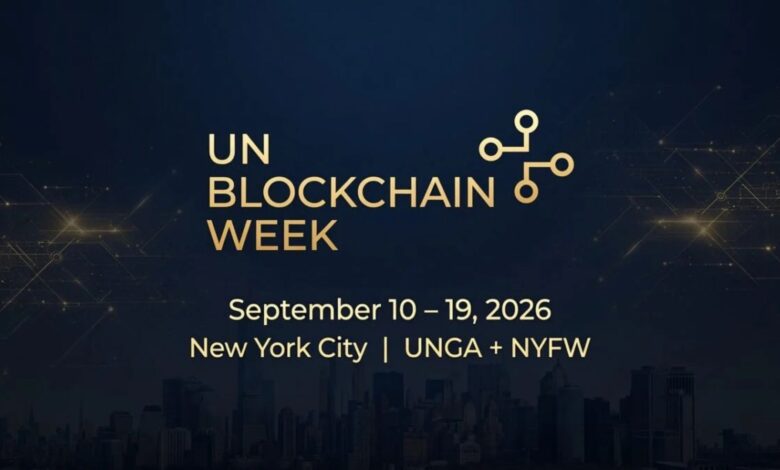
The convergence of global governance and cutting-edge technology has never been more critical than at UN Blockchain Week 2026, an unprecedented event bringing together the world’s most influential blockchain innovators, policymakers, and digital leaders during the United Nations General Assembly and New York Fashion Week. This extraordinary gathering represents a watershed moment for the blockchain industry, positioning distributed ledger technology at the forefront of international dialogue on digital transformation, financial inclusion, and sustainable development.
As we navigate an increasingly interconnected world facing unprecedented challenges in climate change, poverty alleviation, and technological governance, blockchain technology has emerged as a transformative force with the potential to revolutionize how nations collaborate and solve complex global problems. UN Blockchain Week 2026 serves as the definitive platform where these visionary conversations transcend theoretical discussions and manifest into actionable solutions that can reshape economic systems, enhance transparency in international trade, and democratize access to financial services across developing nations.
The timing of this event—positioned strategically during the 2026 United Nations General Assembly—demonstrates the United Nations’ formal recognition of blockchain’s role in achieving the Sustainable Development Goals and addressing critical infrastructure needs in the global south. What makes this gathering particularly significant is its intersection with New York Fashion Week, creating an unexpected but profound synergy between luxury innovation and technological advancement, demonstrating how blockchain solutions extend far beyond cryptocurrency into fashion supply chains, authentication of luxury goods, and ethical sourcing verification.
The Strategic Significance of UN Blockchain Week 2026
UN Blockchain Week 2026 represents far more than another industry conference; it embodies a fundamental shift in how international institutions engage with Web3 technology and recognize blockchain’s potential as an agent of positive global change. The United Nations, historically cautious in embracing emerging technologies, has explicitly positioned this event as a platform for dialogue on digital sovereignty, financial access, and the role of decentralized systems in addressing systemic inequality.
The decision to host this gathering during the 75th session of the United Nations General Assembly signals an unmistakable message to the global community: blockchain innovation is no longer a fringe concern relegated to tech enthusiasts and cryptocurrency traders. Instead, it has become a central consideration in international policy discussions, where representatives from nearly 200 nations will engage with blockchain entrepreneurs, academic researchers, and civil society leaders to explore practical applications addressing real-world challenges.
What distinguishes UN Blockchain Week 2026 from previous blockchain conferences is its explicit focus on humanitarian applications and sustainable development. Rather than concentrating exclusively on financial applications or technical specifications, this gathering emphasizes how blockchain technology can facilitate more efficient humanitarian aid distribution, improve vaccine supply chains in underserved regions, create permanent digital identity records for the world’s 1.1 billion unbanked individuals, and establish transparent systems for tracking carbon credits in climate initiatives.
The integration with New York Fashion Week adds another fascinating dimension, showcasing how blockchain for supply chain management transforms luxury goods authentication, combats counterfeiting, and ensures ethical labor practices throughout manufacturing processes. This convergence demonstrates blockchain’s versatility and applicability across diverse economic sectors, proving that distributed ledger innovation extends far beyond financial services into tangible, consumer-facing applications.
Key Themes and Focus Areas of the 2026 Gathering
Blockchain for Financial Inclusion and Development
The centerpiece of UN Blockchain Week 2026 revolves around leveraging blockchain technology to achieve genuine financial inclusion for the world’s most vulnerable populations. Discussions will focus on how cryptocurrency solutions and decentralized finance platforms can provide banking services to unbanked and underbanked communities without requiring traditional infrastructure that developing nations often lack.
Financial inclusion through blockchain represents one of the most compelling use cases for the technology, as it addresses a fundamental inequity where billions of people lack access to basic banking services, savings mechanisms, and credit facilities. The participants at UN Blockchain Week 2026 will explore how stablecoin technology can provide price-stable digital currencies that encourage savings and facilitate international remittances more efficiently than existing money transfer services. These discussions carry particular weight for sub-Saharan Africa, South Asia, and Southeast Asia, where remittances constitute significant portions of household income and where traditional transfer methods extract substantial fees.
Blockchain-based microfinance platforms will receive particular attention, as they enable lenders to assess creditworthiness through alternative metrics beyond traditional credit histories. By leveraging smart contract technology and distributed ledger systems, financial institutions can extend credit to entrepreneurs and small business owners who would otherwise remain excluded from formal financial systems, thereby catalyzing economic development at grassroots levels.
Blockchain and Sustainable Development Goals
Another fundamental theme threading through UN Blockchain Week 2026 involves aligning blockchain implementation with the United Nations’ Sustainable Development Goals, a comprehensive framework addressing poverty, hunger, health, education, clean energy, and environmental protection. The event will showcase concrete examples of how blockchain platforms facilitate transparent tracking of sustainable investments, verify compliance with environmental standards, and create immutable records of progress toward climate objectives.
Climate finance represents a particularly critical application area, where blockchain technology enables the creation and trading of carbon credits with unprecedented transparency and security. Governments and corporations increasingly recognize that addressing climate change requires massive capital flows toward renewable energy, reforestation, and sustainability initiatives. Blockchain systems can democratize participation in these markets, allowing smaller investors and developing nations to trade carbon credits directly without intermediaries, thereby reducing friction costs and ensuring resources reach intended environmental projects more efficiently.
The technology’s role in tracking supply chains through sustainable sourcing is equally significant. Whether monitoring timber sourcing in tropical forests, tracking minerals to prevent conflict financing, or verifying ethical practices in agricultural production, distributed ledger technology provides an immutable audit trail proving that products meet environmental and social standards. This capability proves particularly valuable during UN Blockchain Week 2026, where fashion industry leaders will demonstrate how blockchain authenticates sustainable materials and ethical manufacturing practices.
Digital Identity and Data Sovereignty
UN Blockchain Week 2026 will extensively address how blockchain-based identity solutions can establish secure, portable, self-sovereign digital identities accessible to the 1.1 billion individuals currently lacking official documentation. This represents a transformative possibility for refugee populations, stateless persons, and people living in regions where government institutions lack capacity to issue reliable identity documentation.
Self-sovereign identity powered by blockchain technology empowers individuals to maintain control over their personal data while selectively sharing credentials with service providers, eliminating the need for centralized government databases that often become targets for identity theft and fraud. This approach proves particularly valuable in developing nations where establishing a digital identity frequently represents the first step toward accessing financial services, education records, healthcare history, and employment opportunities.
The discussions at UN Blockchain Week 2026 will also address data sovereignty, ensuring that nations and communities maintain control over their information and decide how foreign entities, tech corporations, and international organizations utilize data generated within their borders. This theme resonates powerfully with developing nations that historically experienced resource extraction and information asymmetries with wealthy nations, making the prospect of controlling digital assets and data through decentralized systems particularly appealing.
Blockchain in Humanitarian Operations
The practical application of blockchain technology in humanitarian crises represents another central focus of UN Blockchain Week 2026. When natural disasters strike or armed conflicts displace populations, humanitarian organizations face extraordinary challenges in coordinating relief efforts, tracking aid distribution, and preventing diversion of resources to unintended beneficiaries.
Blockchain-based systems can create transparent, real-time records of aid delivery, ensuring that food, medicine, and shelter actually reach intended recipients. Smart contract technology enables automated payment triggering when specific milestones are achieved, such as vaccines reaching distribution points or displaced persons being registered in secure facilities. The immutability of blockchain records provides accountability mechanisms that reassure donors their contributions achieve intended impacts while preventing fraud that occasionally plagues humanitarian operations.
Furthermore, distributed ledger systems can maintain records of displaced persons and refugee movements across borders, facilitating family reunification and preventing human trafficking while respecting privacy through encryption protocols. These applications demonstrate how blockchain’s technical capabilities directly translate into protecting human dignity and saving lives during humanitarian emergencies.
Industry Leaders and Participating Organizations
UN Blockchain Week 2026 attracts an extraordinary assembly of participants representing the entire blockchain ecosystem and complementary sectors. Major cryptocurrency exchanges, blockchain infrastructure companies, and decentralized finance protocols will showcase innovations alongside traditional financial institutions increasingly recognizing blockchain’s transformative potential. Representation from the World Bank, International Monetary Fund, and regional development banks signals mainstream financial institutions’ growing engagement with distributed ledger technology.
Fashion industry titans participating during the overlap with New York Fashion Week bring particular distinction to the gathering, demonstrating blockchain’s applications beyond financial services. Luxury goods producers, fashion authenticators, and supply chain specialists will present solutions addressing counterfeiting, sustainability verification, and ethical sourcing—applications that resonate with consumers increasingly concerned about product provenance and manufacturing ethics.
Academic institutions, including leading blockchain research centers from MIT, Stanford, Oxford, and emerging technology hubs in Asia and Africa, will contribute rigorous scholarship examining distributed ledger innovation, security protocols, environmental impacts, and governance mechanisms. This infusion of academic rigor ensures discussions remain grounded in technical reality while exploring blockchain’s genuine capabilities and limitations.
Civil society organizations focused on human rights, financial inclusion, climate action, and humanitarian assistance will articulate how their constituencies experience blockchain’s impacts and what policy frameworks could maximize benefits while minimizing risks. This diverse representation ensures UN Blockchain Week 2026 functions as a genuine dialogue rather than a one-directional industry promotion.
Policy and Regulatory Discussions
One of the most consequential aspects of UN Blockchain Week 2026 involves policy discussions addressing the regulatory ambiguity that has historically plagued blockchain development. Policymakers, central bankers, and financial regulators from major economies will engage in candid conversations about establishing frameworks that encourage innovation while protecting consumers and preventing misuse of cryptocurrency platforms for money laundering, sanctions evasion, and financing of terrorism.
The convergence of blockchain’s decentralized nature with governments’ regulatory authority creates inherent tensions that the event addresses head-on. Participants will explore how nations can harness blockchain technology’s efficiency benefits while implementing appropriate oversight, how central bank digital currencies can coexist with private distributed ledger systems, and what international standards might coordinate regulation across jurisdictions without stifling innovation.
These discussions prove particularly important for developing nations and emerging economies, where the stakes of getting blockchain policy right carry outsized significance. A nation that embraces sensible cryptocurrency regulation and creates favorable conditions for blockchain companies can attract talent, capital, and economic development. Conversely, overly restrictive policies may drive innovation and investment toward more permissive jurisdictions, leaving nations behind in the digital economy.
The New York Fashion Week Connection
The deliberate positioning of UN Blockchain Week 2026 to overlap with New York Fashion Week creates an unexpected but meaningful synergy between luxury innovation and technological advancement. The fashion industry, despite its glamorous reputation, faces significant challenges in supply chain transparency, counterfeit proliferation, and sustainability verification—challenges that blockchain technology directly addresses.
Luxury fashion houses lose billions annually to counterfeit goods that damage brand reputation and cheat consumers. Blockchain-based product authentication systems create immutable records of a garment’s origin, manufacturing processes, and ownership history, enabling consumers to verify authenticity while giving manufacturers irrefutable evidence of counterfeiting. This capability proves particularly valuable for the extraordinary price premiums luxury goods command, where counterfeiting represents a substantial threat.
Furthermore, consumers increasingly demand sustainability verification, expecting luxury brands to certify ethical labor practices and environmental responsibility throughout supply chains. Blockchain platforms provide transparent, verifiable records proving that materials come from sustainable sources, workers receive fair compensation, and manufacturing processes meet environmental standards. This capability transforms sustainability from an unverifiable marketing claim into a cryptographically secured guarantee, enabling consumers to make genuinely informed purchasing decisions.
The overlapping events also create networking opportunities, enabling fashion industry leaders to understand blockchain applications while blockchain engineers gain appreciation for luxury goods’ authentication and sustainability challenges. This cross-pollination fosters innovation at the intersection of fashion technology and distributed ledger systems.
Anticipated Outcomes and Expected Impact
UN Blockchain Week 2026 will likely produce several significant outcomes extending far beyond the event itself. Participants expect the development of more mature policy frameworks addressing blockchain regulation, with consensus emerging around principles that encourage innovation while implementing necessary safeguards. These frameworks could subsequently influence how individual nations and regional bodies regulate blockchain technology in the subsequent years.
The gathering will probably generate numerous partnerships between international organizations, governments, and blockchain companies focused on implementing blockchain solutions addressing specific development challenges. Concrete pilots and projects addressing financial inclusion, sustainable development, and humanitarian operations will emerge from conversations and commitments made during the event.
Academic research initiatives will expand, with universities and research institutions establishing programs studying distributed ledger technology’s impacts on development, examining security protocols, and exploring social and ethical dimensions of blockchain adoption. This scholarly attention ensures blockchain development remains informed by rigorous analysis rather than speculative hype.
Furthermore, UN Blockchain Week 2026 will likely influence how the United Nations itself engages with blockchain technology, potentially establishing institutional frameworks for the organization’s utilization of distributed ledger systems in operations, transparency initiatives, and coordination with member states. Such adoption would represent a profound validation of blockchain’s maturation from speculative technology to tools worthy of deployment by the world’s primary international organization.
Conclusion
UN Blockchain Week 2026 represents a pivotal moment in blockchain’s evolution from speculative technology toward recognized infrastructure for solving genuine global challenges. The event’s strategic positioning during the United Nations General Assembly demonstrates international institutions’ formal recognition of distributed ledger technology’s potential to address financial inclusion, sustainable development, humanitarian operations, and policy coordination.
The convergence with New York Fashion Week proves equally significant, illustrating how blockchain applications extend far beyond financial services into practical supply chain management, product authentication, and sustainability verification. This multifaceted gathering brings together an extraordinary assembly of participants—policymakers, entrepreneurs, academics, and civil society leaders—united by recognition that blockchain technology, despite its challenges and controversies, offers genuine promise for addressing systemic inequalities and creating more transparent, efficient systems.
As the world navigates unprecedented challenges requiring unprecedented solutions, UN Blockchain Week 2026 provides a crucial forum where the possibility becomes reality, where policy discussions ground visionary thinking in implementable frameworks, and where diverse stakeholders recognize that blockchain innovation and international development are no longer separate concerns but deeply intertwined elements of humanity’s technological future. The outcomes of this gathering will likely reverberate through international policy, business strategy, and technological development for years to come.